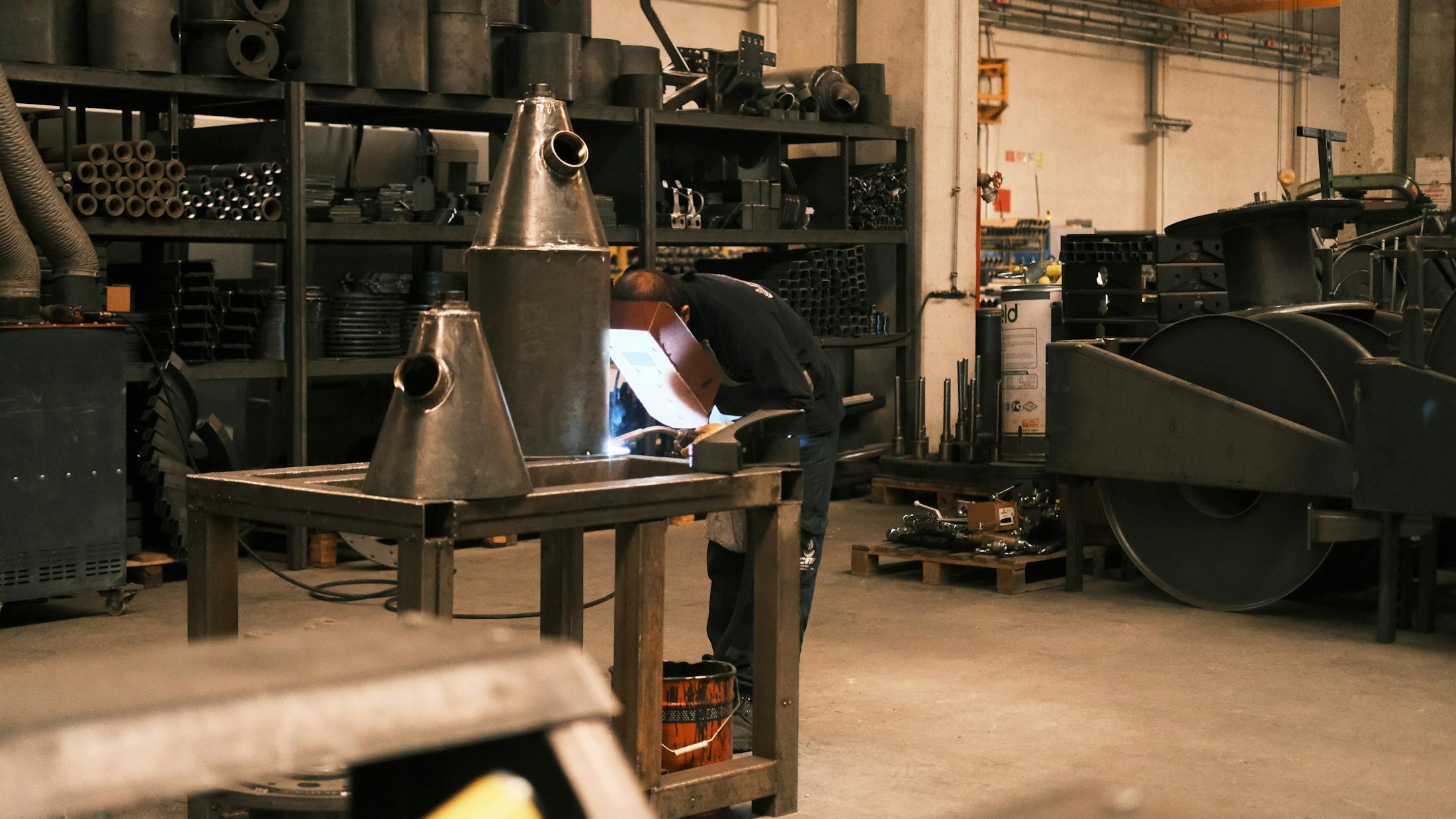
Hot-rolled steel is the heavy, primary structure, the beams and columns that carry a building. Cold-formed steel is light-gauge sections, formed from thin coil, used for purlins, rails and secondary framing. Most commercial frames use both, each where it's most efficient.
How they're made
Hot-rolled steel is shaped at high temperature into thick structural sections, universal beams and columns, hollow sections and channels. Cold-formed steel is rolled or pressed from thin steel coil at room temperature into light sections such as Z and C purlins and metal framing. The process gives each very different strength and weight.
Where hot-rolled is used
Hot-rolled sections are the primary load-carrying structure: the columns, main beams, transfer structures and portal frames that hold a building up. This is the bulk of what we fabricate as structural steelwork.
Where cold-formed is used
Cold-formed sections do the lighter work: purlins and side rails that support roof and wall cladding, and light steel framing for infill walls and some floors. They're efficient where loads are modest and weight matters, but they don't replace the hot-rolled primary frame.
Used together
A typical commercial or industrial building combines the two: a hot-rolled primary frame carrying the loads, with cold-formed purlins and rails carrying the envelope. The skill is specifying each where it earns its place. Send your drawings and we'll fabricate the structural steelwork to suit.
Common questions
- What is the main difference between hot-rolled and cold-formed steel?
- Hot-rolled steel is shaped at high temperature into heavy structural sections (beams, columns) that carry the building. Cold-formed steel is formed cold from thin coil into light sections (purlins, rails, framing) for secondary, lower-load uses.
- Is cold-formed steel structural?
- Yes, but for lighter duties. Cold-formed sections carry cladding as purlins and rails, and form light steel walls and some floors. The primary load-bearing frame of a commercial building is normally hot-rolled steel.
- Do buildings use both hot-rolled and cold-formed steel?
- Usually, yes. A common arrangement is a hot-rolled primary frame with cold-formed purlins and rails supporting the roof and wall cladding, each used where it is most efficient.